
Digital Archiving for Audio-Video Assets Before Legacy Media Becomes Silent
Digital archiving for audio-video assets UAE institutions need is urgent when old recordings, tapes, broadcasts, interviews, lectures, or cultural media exist but cannot be searched, played, described, or protected with confidence.
Audio and video collections carry memory that documents alone cannot hold.
A voice can preserve a moment. A video can explain an event better than any report. A broadcast can capture culture, language, and institutional history. But these assets are fragile when they sit on old formats, unnamed drives, scattered folders, or unsupported systems.
COMTASK helps organizations assess, structure, digitize, describe, store, and govern audio-video assets. The work is practical: what exists, what is at risk, what should be digitized first, which formats matter, and how users will find the material later.
This solution supports media, cultural, education, government, and institutional clients across the UAE, GCC, selected MENA markets, and Africa.
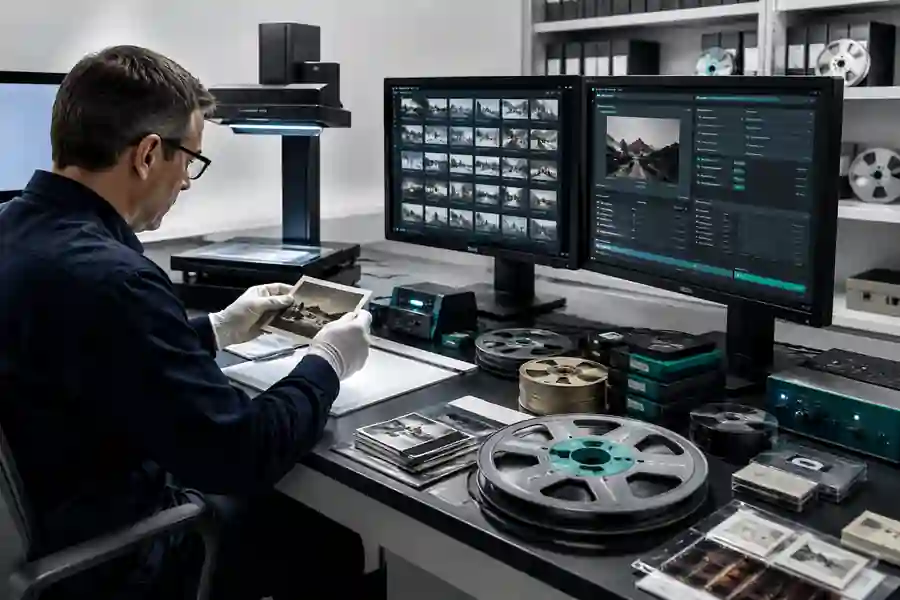
Digitization alone is not preservation. Audio-video assets need metadata, format decisions, quality checks, storage tiers, access copies, and future migration planning.
What COMTASK reviews and plans.
- Audio, video, tape, reel, cassette, and file inventory.
- Condition, format, duplication, and playback risk review.
- Prioritization by value, fragility, demand, and risk.
- Digitization workflow and quality control plan.
- Metadata fields for search, context, rights, and technical description.
- Preservation copy and access copy logic.
- Storage, backup, permission, and access model.
- Governance and future migration plan.
How the solution works.
Identify the collection
We map formats, quantities, locations, condition, ownership, and known risks.
Prioritize fragile assets
We decide what needs action first based on value, risk, and access demand.
Design the metadata model
We define what information must travel with each recording or video.
Plan digitization and access
We structure preservation files, access copies, storage, backup, and user access.
Best-fit collections.
Broadcast archives
Radio, television, interviews, programs, and recorded events.
Cultural memory assets
Oral history, heritage recordings, ceremonies, photographs, and community media.
Institutional media
Lectures, training videos, executive speeches, project footage, and internal recordings.
Audio-video archiving connects with AI, IT, and digital access.
Once media is digitized and described, organizations can consider search portals, AI-assisted transcription, controlled public access, or internal knowledge platforms.
COMTASK can connect this solution to Digital Archiving, IT Solutions, AI Consulting, and Custom Business Portals when the archive needs a wider access model.
Useful external reference
This page links to a relevant public reference to support the wider topic context. COMTASK still adapts the work to your actual business situation.
Questions about digital archiving for audio-video assets UAE institutions often ask.
Can COMTASK digitize old tapes directly?
COMTASK can help plan and coordinate digitization workflows. The exact capture process depends on formats, equipment, condition, and supplier availability.
What makes audio-video archiving different from document scanning?
Audio and video require playback risk review, format planning, technical metadata, quality control, access copies, and long-term storage planning.
Can AI help transcribe recordings?
Yes, but transcription should include human review, language considerations, rights controls, and quality checks.
How do we choose what to digitize first?
Prioritize items that are fragile, valuable, frequently requested, legally important, or difficult to play.
What is the main output?
A practical audio-video preservation plan covering inventory, priority, metadata, digitization workflow, storage, and access.
Protect the recordings before access becomes impossible.
COMTASK can help you assess your audio-video collection and define the safest practical starting point.