COMTASK FZE LLC
United Arab Emirates



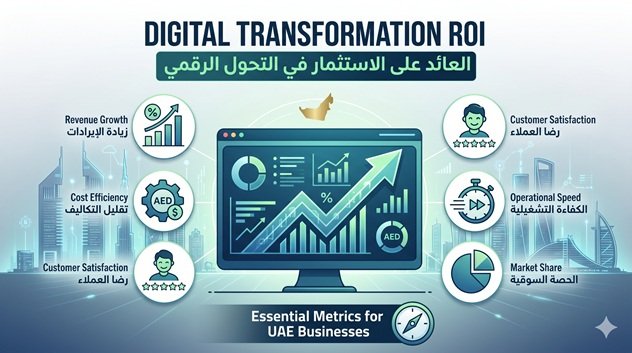
Digital Transformation ROI: What UAE Businesses Need to Measure
Digital transformation ROI is now a serious boardroom issue for UAE businesses. Digital transformation budgets have grown as companies respond to government digitization programs, AI disruption, hybrid work, and the pressure of a more connected regional economy.
The key question is simple: how do you know whether the investment is working?
The problem is not that digital transformation fails to create value. The problem is that many organizations measure it poorly. Poor measurement leads to poor decisions about where to invest, what to change, and when to stop.
Table of Contents
- The Digital Transformation Measurement Trap
- 4 Powerful Steps to Measure Digital Transformation ROI
- What Good Digital Transformation ROI Looks Like
- The Bottom Line for UAE Businesses
- How COMTASK Can Support Your Digital Transformation
The Digital Transformation Measurement Trap
The most common mistake is measuring technology adoption instead of business outcomes.
A company may report that 80% of its infrastructure moved to the cloud. Another may report that employees completed a new digital training program. These figures measure activity. They do not prove business value.
Technology adoption matters, but it is not the same as return on investment. A cloud migration only creates value if it improves cost, speed, resilience, customer experience, productivity, or decision-making.
The second mistake is measuring too early. Many real benefits of digital transformation take time. Process efficiency, customer satisfaction, new digital revenue, and employee productivity gains may take 12 to 36 months to appear fully.
When organizations judge a transformation after six months and see limited results, they may stop too early. The issue may not be failure. It may be poor timing.
4 Powerful Steps to Measure Digital Transformation ROI
1. Define Business Objectives, Not Technology Milestones
Before selecting any system or spending any budget, leadership must define the business problem the transformation should solve.
Weak objective: Implement a new CRM system.
Strong objective: Reduce customer complaint resolution time from 72 hours to 24 hours.
The first statement is a technology milestone. The second statement is a measurable business outcome.
Digital transformation ROI becomes clearer when every project connects directly to a business result. These results may include lower operating cost, faster service delivery, better customer retention, stronger compliance, or higher revenue from digital channels.
2. Establish a Baseline Before You Start
You cannot measure improvement without knowing your starting point.
Many organizations launch digital transformation initiatives without documenting current performance. This creates a measurement problem later. Leaders cannot prove progress because they do not have a clear baseline.
Before implementation starts, measure the current position on key metrics such as:
- Customer satisfaction score.
- Complaint resolution time.
- Process cycle time.
- Cost per transaction.
- Employee productivity.
- Error rate.
- Digital channel usage.
- Customer retention.
- Revenue from digital channels.
This baseline allows the organization to compare performance before and after transformation.
3. Separate Leading Indicators from Lagging Indicators
Good digital transformation measurement uses both leading and lagging indicators.
Leading indicators show whether the transformation is taking root. These may include system adoption rates, employee digital literacy scores, training completion, process completion rates, and active usage of new platforms.
Lagging indicators show whether the transformation is producing business results. These may include revenue growth, customer retention, cost reduction, faster delivery, fewer errors, and higher profitability.
Both types are useful. But they should not be confused.
High adoption of a new system may suggest that business results could follow. But adoption alone is not a business result. Digital transformation ROI must connect adoption to measurable outcomes.
4. Build a Benefits Realization Plan
A benefits realization plan connects each digital transformation initiative to specific business outcomes.
This plan should answer five direct questions:
- What business outcome should this initiative deliver?
- Which metric will prove the outcome?
- What is the current baseline?
- Who owns the result?
- When should the benefit appear?
This creates clarity before implementation starts. It also creates accountability after implementation.
Without a benefits realization plan, digital transformation can become a list of technology projects. With a benefits realization plan, it becomes a structured business improvement program.
What Good Digital Transformation ROI Looks Like
Across UAE and GCC transformation projects, strong digital transformation ROI usually appears over a two-to-three-year window. Short-term results may appear earlier, but the full business value often needs more time.
Good ROI can appear in several forms:
- Lower operating cost.
- Faster internal processes.
- Better customer experience.
- Higher employee productivity.
- Improved compliance and reporting.
- Reduced manual work.
- Higher digital sales.
- Better data visibility for leaders.
The strongest returns usually come when technology, process, people, and leadership commitment work together.
The technology is rarely the only variable. The real difference often comes from change management, organizational readiness, leadership discipline, and user adoption.
This is why measurement frameworks that focus only on technical performance can miss the real drivers of success. Uptime, processing speed, and system integration matter. But they are not enough. Leaders also need to measure whether people use the system correctly and whether the system improves business results.
The Bottom Line for UAE Businesses
UAE businesses should measure digital transformation ROI through business outcomes, not technology outputs.
Define success before the project starts. Establish a baseline. Track leading and lagging indicators. Build a benefits realization plan. Give the transformation enough time to show real value.
Most importantly, invest in change management with the same seriousness you apply to system selection. Digital transformation succeeds or fails through people, process, leadership, and execution.
How COMTASK Can Support Your Digital Transformation
COMTASK’s Digital Transformation Consultancy practice helps UAE organizations develop measurement frameworks, manage change, and achieve real business results from technology investments.
We support organizations through digital strategy, KPI design, benefits realization planning, change management, project governance, and implementation support.
Related COMTASK services include:
- Digital Transformation Consultancy
- Management Consultancy
- Project Management
- IT Solutions and Consulting
- Contact COMTASK
You can also review the UAE’s digital government direction through the official Digital UAE portal.
If your organization wants to measure digital transformation ROI more clearly, contact COMTASK at info@comtask.net or visit our contact page.